Feed your flock right, from day one to peak production — with feed milled right here in Minnesota.
Bloomington Farm & Feed sources chicken feed exclusively from local mills: Heim Milling, Luxemburg's Feed Service, and Famo Feeds, all committed to quality nutrition and fresh-milled product you can trust.
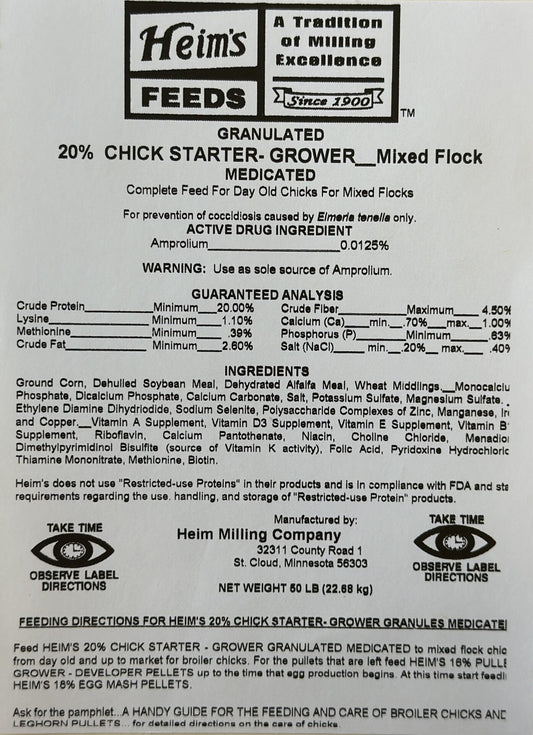
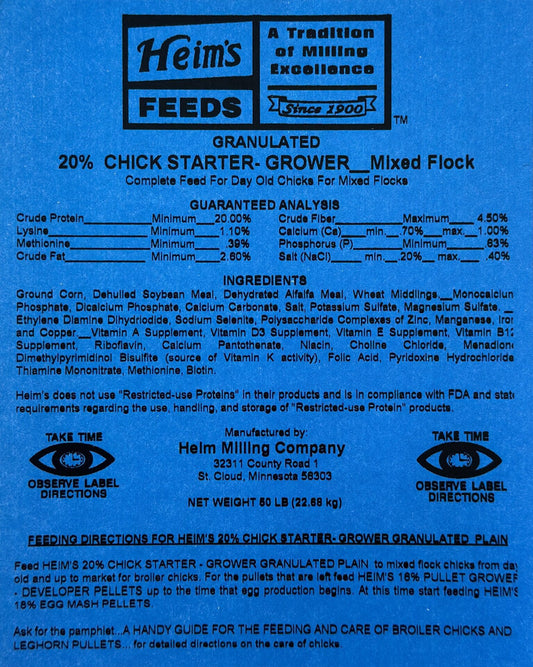
For chicks and growers, choose from Heim Milling's 20% Chick Starter-Grower Crumble (medicated and non-medicated) or Luxemburg's 22% Non-GMO No Corn No Soy Starter Mash.
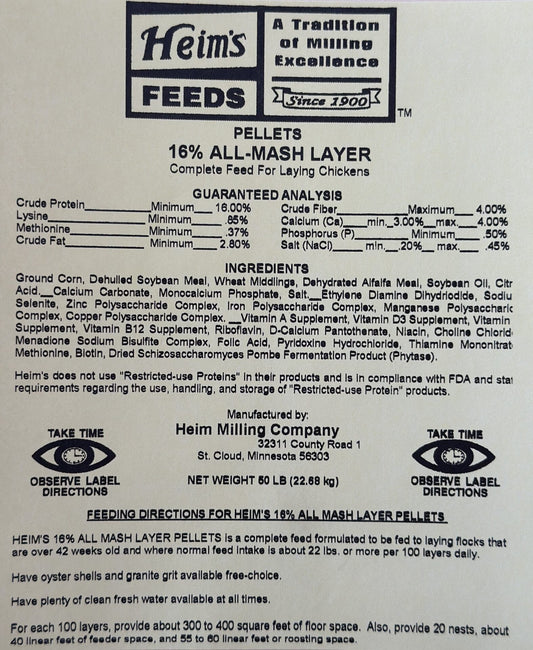
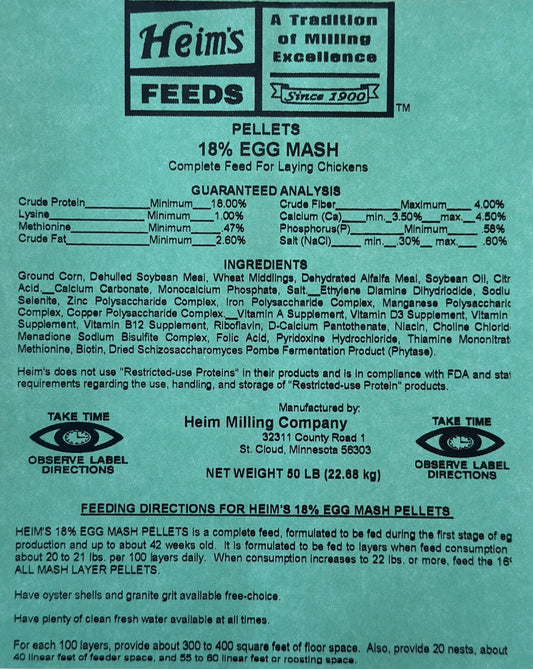
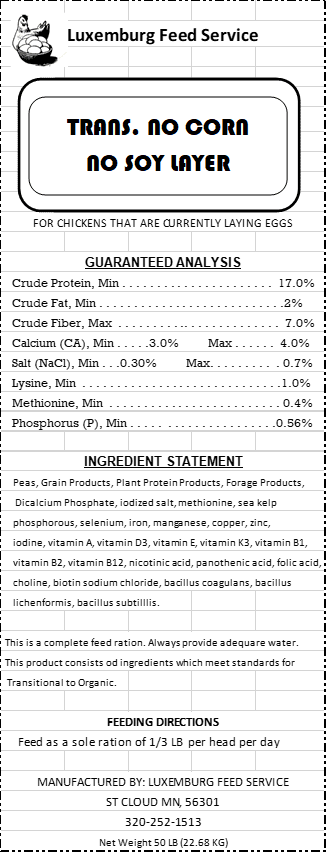
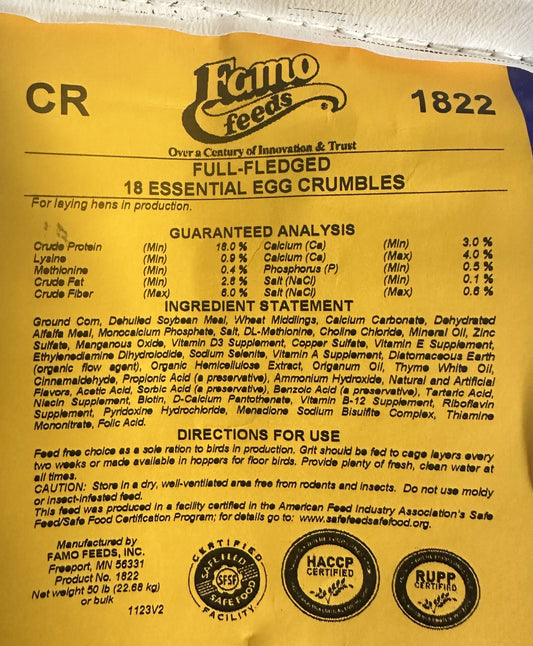
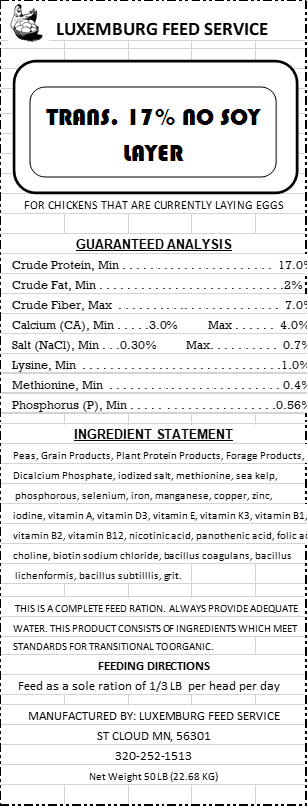
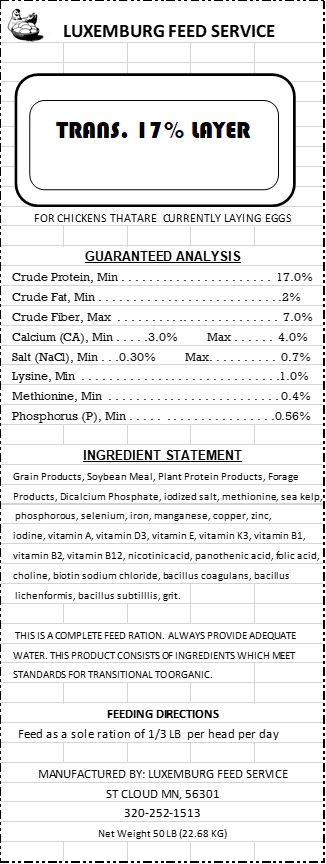
For laying hens, we carry a full range of layer feeds — from Heim's 16% and 18% Egg Boost Mash Pellets to Famo's 18% Layer Crumble and Luxemburg's 17% layer mashes in Non-GMO, No Soy, and No Corn No Soy formulations.
Whether you're feeding conventionally or keeping a corn-free, soy-free flock, we have the right feed for your birds — available in 25lb and 50lb bags for local delivery or pickup in the Twin Cities metro.
Chicken Feed FAQs
What should I feed my laying hens?
Laying hens need a complete layer feed with 16–18% protein and added calcium to support strong eggshell production. We carry locally milled layer feeds from Luxemburg Feed Mill and Heim's Milling, sourced right here in Minnesota.
How much feed does a chicken eat per day?
Most laying hens eat about ¼ pound (roughly ½ cup) of feed per day. Free-choice feeding — keeping feeders full at all times — works well for most backyard flocks and prevents competition between birds.
What's the difference between layer feed, grower feed, and starter feed?
Starter feed (high protein, 20–24%) is for chicks 0–8 weeks. Grower feed (16–18% protein, no added calcium) is for pullets 8–18 weeks. Layer feed (16–18% protein, added calcium) is for hens 18 weeks and older who are actively laying eggs.
What do chickens eat in a Minnesota winter?
In cold months, chickens benefit from a slightly higher-calorie diet to maintain body heat. Scratch grains as an evening treat, warm oatmeal, and high-protein feed help flocks stay healthy through harsh Minnesota winters. Avoid reducing feed — birds need more energy, not less, when temperatures drop.
Is locally milled chicken feed better than national brands?
Locally milled feed is fresher, with shorter time between milling and delivery — meaning more intact nutrients. Our Minnesota mill partners mill in small batches without the long supply chains of national brands, so you know exactly where your feed comes from.
Read more from our Flock Blog:
→ How Much Do Chickens, Game Birds & Ducks Eat Per Day
→ What to Feed Chickens at Every Life Stage
→ Understanding Medicated Feeds – Protecting Your Chicks from Disease
→ Molting 101: What It Is & How to Support Your Flock
→ How to Help Your Chickens Lay Stronger, Healthier, Tastier Eggs
→ Raising Ducks and Chickens Together: What You Need to Know
→ Feeding Hens and Roosters Together: What You Need to Know