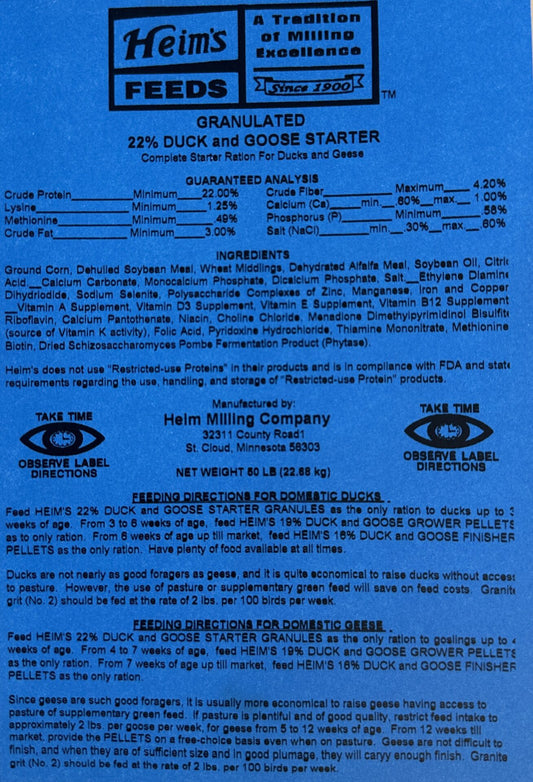
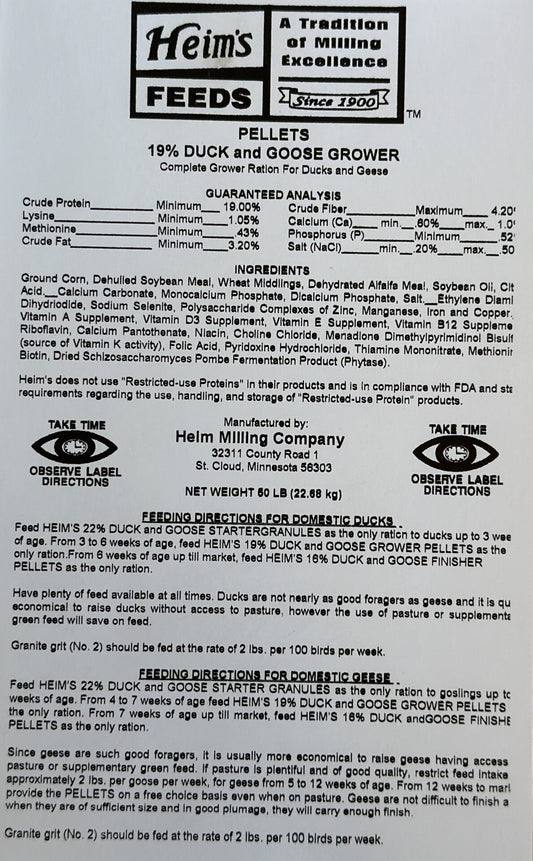
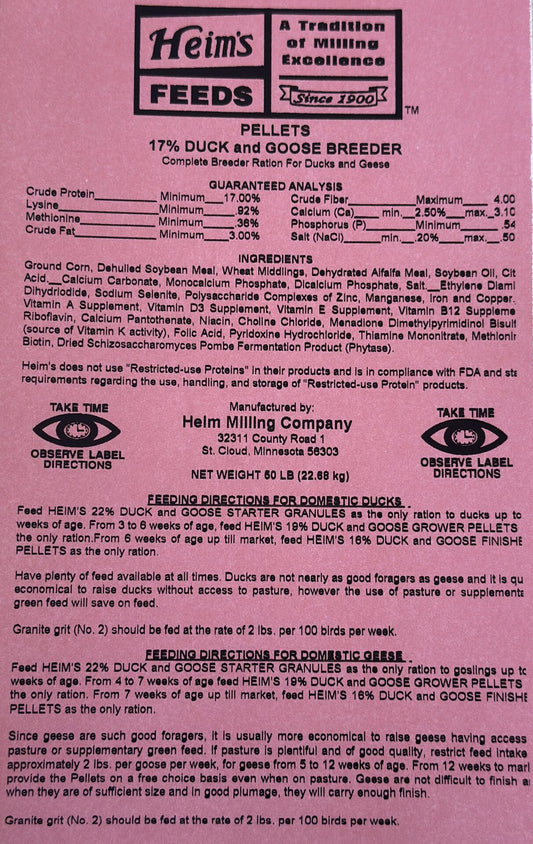
Ducks and geese have unique nutritional needs that standard chicken feed simply doesn't meet. At Bloomington Farm & Feed, we carry waterfowl-specific feeds formulated for healthy growth, strong egg production, and long-term flock wellness — available for next-day local delivery throughout the Twin Cities metro.
Key differences from chicken feed: waterfowl need lower niacin levels than chickens require, and should never be fed medicated chick starter. We carry feeds specifically balanced for ducks and geese at every life stage, from ducklings to laying hens.
Duck & Goose Feed FAQs
Can ducks and geese eat chicken feed?
Not as a primary diet. Chicken layer feed contains too much calcium for non-laying ducks and geese, and medicated chick starter can be harmful to waterfowl. Ducks and geese also require more niacin (Vitamin B3) than chickens — a deficiency can cause leg problems and poor growth. Waterfowl-specific feed or an unmedicated starter with a niacin supplement is the right choice.
What should I feed ducklings?
Ducklings need an unmedicated starter feed with at least 20% protein for the first 2–3 weeks, then a grower feed through 18 weeks. Because most chick starters are low in niacin, add brewer's yeast (about 1 tablespoon per cup of feed) to support healthy leg development in fast-growing ducklings.
What do laying ducks need in their feed?
Laying ducks need a feed with 16–18% protein and added calcium for strong eggshell production — similar to chicken layer feed, but formulated for waterfowl. Duck eggs have thicker shells than chicken eggs, so calcium is especially important during peak laying season.
How much do ducks and geese eat per day?
A full-grown duck eats roughly ¼ pound of feed per day. Geese eat more — typically ½ pound or more depending on size and season. Both species also forage heavily if given access to pasture, which can reduce feed consumption significantly in warmer months.
Do ducks and geese need water with their feed?
Yes — waterfowl must have access to fresh water whenever they eat. They use water to swallow and digest feed, and can choke without it. A waterer placed near (but not in) the feeder is essential. This also makes keeping waterers clean a priority — ducks will dunk their feed in water constantly.
Read more from our Flock Blog:
→ Feeding Ducks & Geese: Specialized Nutrition for Healthy Waterfowl
→ Water Needs for Ducks & Geese
→ Raising Ducks and Chickens Together: What You Need to Know
→ How Much Do Chickens, Game Birds & Ducks Eat Per Day
→ Duck & Goose Brooding Guide for Twin Cities Keepers