Collection: Egg Collection & Storage
From backyard coop to kitchen table — shop our egg collection and storage essentials. Whether you're gathering chicken, duck, or quail eggs, we carry the tools you need. Available for Twin Cities local delivery.
Egg Collection & Storage FAQs
How often should I collect eggs?
Collect eggs at least once a day — twice daily in summer when heat can cause eggs to spoil faster, and in winter when eggs can freeze and crack if left too long. Frequent collection also discourages hens from going broody and reduces the chance of eggs being broken or eaten in the nest box.
Do fresh eggs need to be refrigerated?
In the US, commercially washed eggs must be refrigerated because washing removes the natural bloom (cuticle) that protects the shell. Unwashed backyard eggs can be stored at room temperature for 2–3 weeks if kept in a cool, dry place. Once washed or refrigerated, keep them refrigerated. When in doubt, refrigerate — eggs last up to 3 months in the fridge.
How do I clean dirty eggs?
Only wash eggs right before use if possible — washing removes the bloom and shortens shelf life. If you must clean eggs for storage, use warm (not cold) water slightly warmer than the egg, and dry immediately. Cold water causes the egg to contract and can draw bacteria through the shell. A dry scrub pad or fine sandpaper works well for lightly soiled eggs without wetting them.
How can I tell if an egg is still fresh?
The float test is the easiest method: place the egg in a glass of water. Fresh eggs sink and lay flat. Older eggs stand upright or float — the air cell inside grows as the egg ages. A floating egg should be discarded. You can also candle eggs with a bright light to check for cracks or development inside.
How do I store duck and quail eggs differently from chicken eggs?
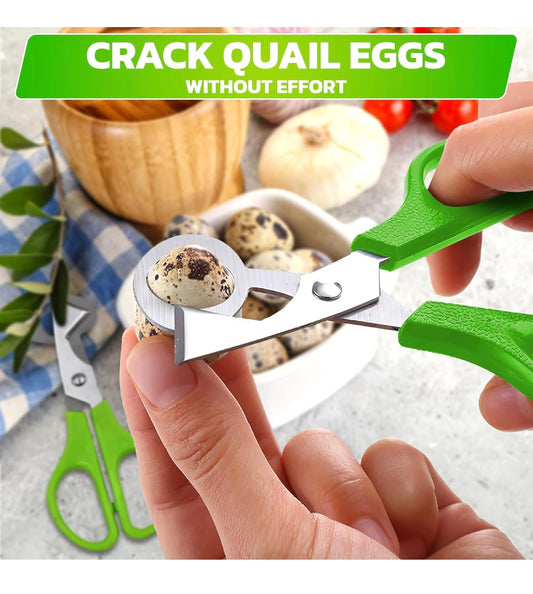
Duck eggs have a thicker shell and bloom, giving them a longer shelf life than chicken eggs — up to 6 weeks refrigerated. Quail eggs are small and delicate but store similarly to chicken eggs. Both can be stored unwashed at room temperature for a shorter period or refrigerated for longer storage. Quail egg scissors make cracking the small shells much easier without losing the yolk.
Read more from our Flock Blog:
→ Help Your Chickens Lay Better Eggs
→ Why Pasture Raised Eggs Are Best
→ What To Feed Chickens At Every Stage